

This week I shipped a new zoom feature for PhotoJourney, got stuck trying to use AI to build it, and spent some time thinking about Cal AI’s acquisition by MyFitnessPal. All three got me thinking about where AI is helpful right now, where it still falls short and how it doesn’t make up for great distribution.

Good At Maths, Bad At Touch
I shipped a zoom feature for PhotoJourney this week. The app has a photo compare screen where you put two photos side by side or use a swipe-to-reveal slider to spot differences over time, and I wanted to let people pinch into a specific area to compare detail up close. Check out the finished feature in the demo video below, or in the app.
AI handled building parts of this really well. The maths for cropping images to match a zoomed region, for example, would have taken me much longer to get right on my own. But the core challenge was getting zoom, swipe and scroll gestures to all work together on the same screen without conflicting, and AI struggled.
This is a pattern I keep running into in native app development. AI is generally great at building well-defined features and plugging into the existing architecture of the codebase. But it often struggles with features involving complex gestures, overlapping animation or UI that needs to feel right when you actually use it. For this zoom feature, it was able to set up the code for pinch gesture and a swipe gesture on the same screen. But it couldn’t reason well about what happens when a person touches the screen and those gestures conflict or how UI would look during interaction.
I still ended up using AI to build out the feature, but I had to be very specific in how I wanted that feature to be built under the hood. I wonder if Apple will build dev tools that let AI observe and interact with a running app in simulator down the line. That feels like the missing feedback loop to me.
Where AI Built A Company Worth Acquiring
Cal AI was recently acquired by MyFitnessPal, for an undisclosed sum, which reportedly exceeds $100 million. Their app does one thing well: helps you track your calories by taking a photo of your food. It does this using LLM technology to analyze food items in a photo and make a calculated estimate of calories and nutritional value of the food.
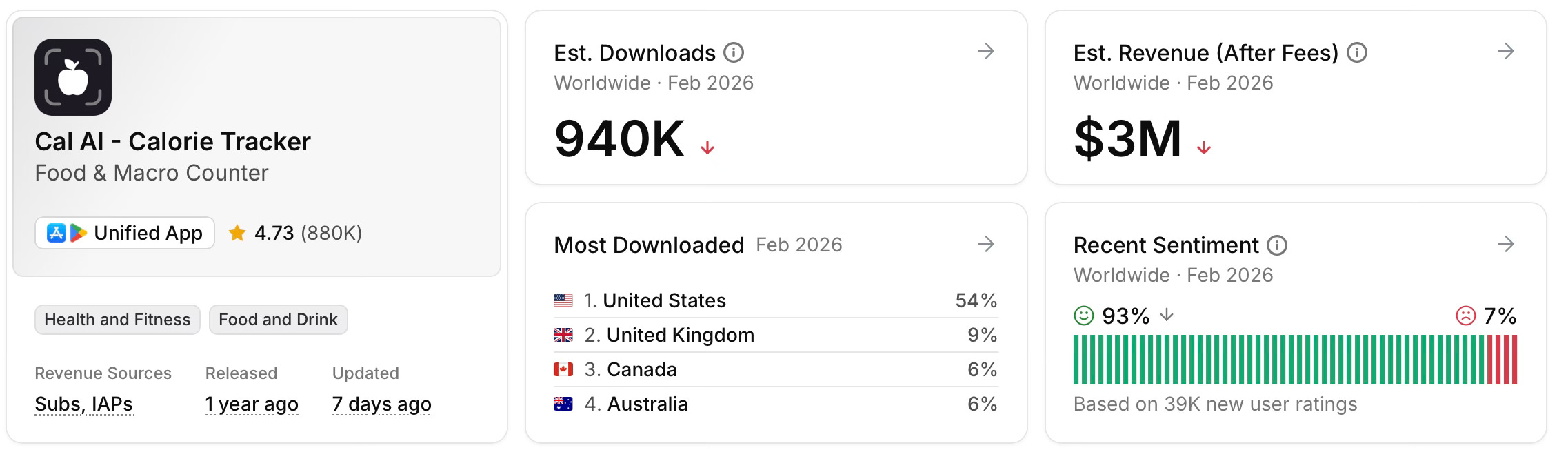
According to AppFigures, Cal AI reported over 900,000 downloads in February alone with an estimated $3 million in monthly revenue. That doesn’t happen because of the AI technology they used to build it. That happens because of distribution. Excellent social content, aggressive paid marketing and smart positioning.
Cal AI is an excellent example of what happens when someone picks the right (simple) problem for AI to solve and then puts serious effort into getting it in front of people, fast. The AI is what makes the product work, but the distribution is what made it worth acquiring.
When I started out as an indie dev, I didn’t give nearly enough credit to how much distribution was going to be by far my biggest challenge. I’ve since learned the hard way that you can build something that solves a problem yet still struggle to get it in front of even a handful of people. Going forward I will be focusing much more of my time on organic and paid social strategies for app distribution, so I’ll be sure to share what works and what doesn't.
Goals for Next Week
I’ve got a few WealthLog feature requests from users that I want to dig into. I’m also trying to get into a better rhythm with sharing blog posts. Writing doesn’t come naturally to me, so I’ve been building some AI tooling to help with editing and structuring posts. The goal is to make the process fast enough that posting weekly actually becomes a maintainable habit rather than something that eats half of my day.
That’s it for this week. Thanks for reading.
– Mike